> For the complete documentation index, see [llms.txt](https://docs.apolo.us/index/llms.txt). Markdown versions of documentation pages are available by appending `.md` to page URLs; this page is available as [Markdown](https://docs.apolo.us/index/apolo-concepts-cli/apps/installable-apps/available-apps/superset.md).
# Superset
### Overview
**Apache Superset** is a modern, enterprise-ready business intelligence web application for data exploration and visualization. Designed for scalability, extensibility, and ease of use, Superset supports a wide range of SQL-speaking databases and enables teams to create rich dashboards and interactive charts without writing code. Built with a lightweight architecture and a user-friendly interface, Superset is ideal for organizations seeking powerful, open-source BI tooling.
For more information about the Superset app, as well as detailed instruction of how to use it in Apolo Console, visit the main Superset page.
### Managing application via Apolo CLI
Superset can be installed on Apolo either via the CLI or the Web Console. Below are the detailed instructions for installing using Apolo CLI.
**Install via Apolo CLI**
**Step 1** — Use the CLI command to get the application configuration file template:
```
apolo app-template get superset > superset.yaml
```
**Step 2** — Customize the application parameters. Below is an example configuration file:
```yaml
# Application template configuration for: superset
# Fill in the values below to configure your application.
# To use values from another app, use the following format:
# my_param:
# type: "app-instance-ref"
# instance_id: ""
# path: ""
template_name: superset
template_version: v25.12.0
input:
# Enable access to your application over the internet using HTTPS.
ingress_http:
# Configure authentication for this ingress.
auth:
# Authentication type identifier.
type: apolo_auth
# Set the configuration for Superset Web UI.
web_config:
# Select the resource preset used per service replica.
preset:
# The name of the preset.
name: cpu-medium
# Set the configuration for Superset worker.
worker_config:
# Select the resource preset used per service replica.
preset:
name: cpu-medium
# Select the resource preset used for the Redis instance.
redis_preset:
name: cpu-small
# Database for Superset. Provide a preset to let Apolo deploy a dedicated
# Postgres within the app (shown here), or supply the credentials of an
# existing Postgres instead (see the note below).
postgres_config:
preset:
name: cpu-medium
# Set the admin user fields.
admin_user:
# Set Admin Username.
username: admin
# Set Admin first name.
firstname: Superset
# Set Admin last name.
lastname: Admin
# Set Admin email.
email: admin@superset.com
# Set Admin password.
password: admin
```
To use an **existing** Postgres instead of a dedicated one, replace `postgres_config` with the connection credentials. `pgbouncer_host` and `pgbouncer_port` are optional:
```yaml
postgres_config:
user: ''
# Apolo Secret holding the password.
password:
key: ''
host: ''
port: 5432
dbname:
# Optional PGBouncer connection details.
pgbouncer_host:
pgbouncer_port:
```
Explanation of configuration parameters:
1. **Resource Presets**: Choose compute presets for the Web UI, worker, and Redis. Superset is a CPU workload, so CPU presets such as `cpu-medium` / `cpu-small` are sufficient.
2. **Postgres**: Provide a `preset` to have Apolo deploy a dedicated Postgres for the app, or supply the credentials of an existing Postgres.
3. **HTTP Authentication**: Enabled for secure access.
4. **Admin User:** Set admin login credentials.
**Step 3** — Deploy the application in your Apolo project:
```
apolo app install -f superset.yaml
```
Monitor the application status using:
```
apolo app list
```
To uninstall the application, use:
```
apolo app uninstall
```
If you want to see logs of the application, use:
```
apolo app logs
```
For instructions on how to access the application, please refer to the [Usage](#usage) section.
### Usage
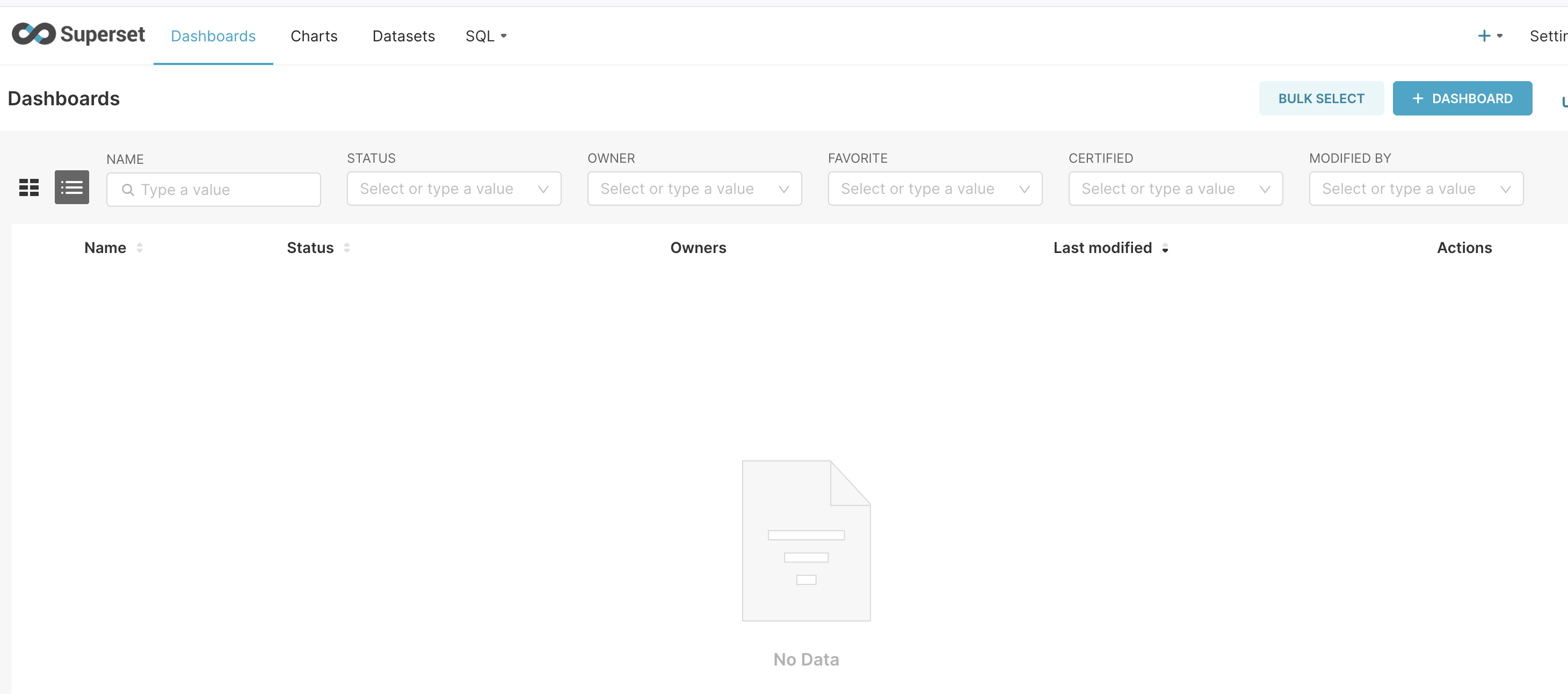
After installation, you can utilize Superset for data visualization workflows and you can access it directly from your browser. To view and manage installed instances of the Superset app:
1. Go to the **Installed Apps** tab.
2. You will see a list of all running apps, including the **Superset** app you just installed. To open the detailed information & uninstall the app, click the **Details** button.
Once in the Details page, click the **Open App** button at the top of the page to launch the application in a dedicated browser window.
Connect the data sources, build charts, and dashboards.